Why Does a Car’s Paint Lose Gloss? The Science Behind Paint Oxidation, Washing Damage & Paint Correction.
A new car’s paint has a characteristic depth and clarity that is difficult to replicate once the vehicle has been exposed to the environment for several years.
The reflections are sharp. The colour looks deep. Under direct sunlight, the surface appears almost liquid.
Then, gradually, something changes.
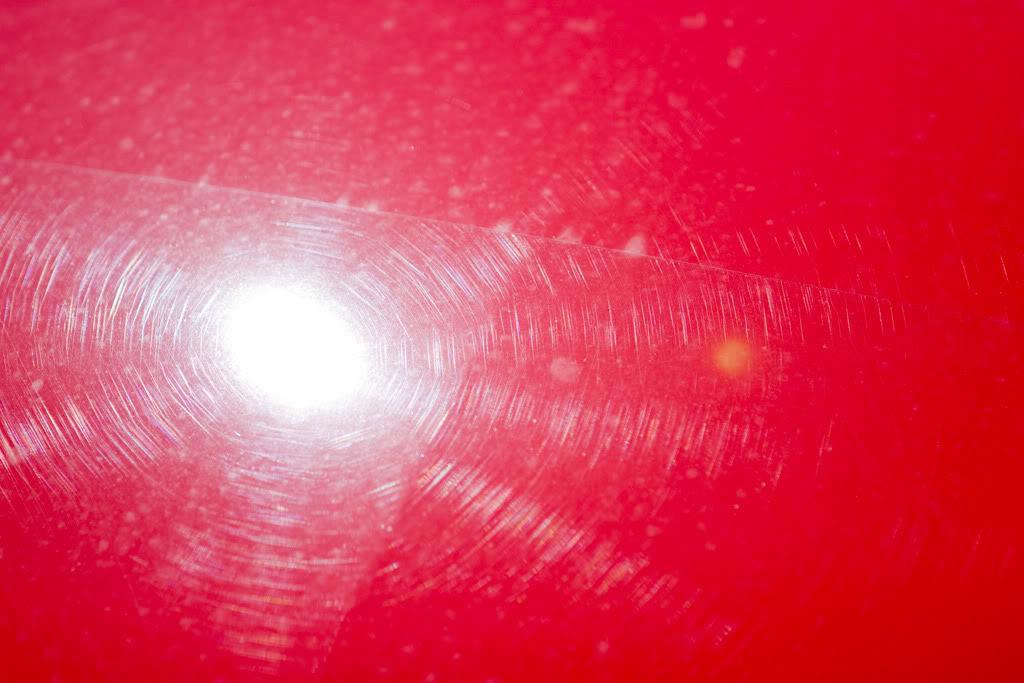
The paint begins to look dull. Reflections become less defined. Fine scratches become visible under sunlight. The colour appears less vibrant, and the vehicle no longer has the crisp, deep gloss it had when it was new.
Most people describe this simply as “the paint has faded.”
But paint does not lose its gloss for just one reason.
The appearance of automotive paint is affected by a combination of UV exposure, photo-oxidation, environmental contamination, chemical attack, thermal cycling, microscopic surface damage and, surprisingly often, the way the vehicle itself is washed and maintained.
Some of these processes are environmental and unavoidable.
Others are completely preventable.
And understanding the difference is critical because there is a limit to how many times a paint surface can be polished before there is simply not enough clearcoat left to safely correct.
The Automotive Paint System
Before discussing oxidation, it is important to understand what we are actually looking at when we look at a glossy car.
Modern automotive paint is a multilayer system.
Depending on the vehicle and manufacturer, the system can include an electrocoat, primer, basecoat and clearcoat.
The basecoat provides much of the vehicle’s colour, while the clearcoat is the transparent outer layer responsible for much of the gloss, optical clarity and surface protection.
When you look at a deep black, red, blue or metallic vehicle and see a sharp reflection, you are largely seeing the optical behaviour of this clear surface.
The clearcoat is therefore not simply “clear paint.”
It is a highly engineered polymer system designed to withstand UV radiation, moisture, temperature changes, chemicals and environmental contamination.
Modern coating systems may also contain UV absorbers and light stabilisers designed to slow photochemical degradation.
But no clearcoat is infinitely resistant to the environment.
What Actually Causes Paint to Lose Gloss?
There are two broad categories of damage:
Chemical degradation and physical surface damage.
Chemical degradation includes processes such as photo-oxidation and weathering caused by UV radiation, oxygen, heat, moisture and contaminants.
Physical damage includes scratches, swirl marks, marring and other defects introduced when something comes into contact with the paint.
These two processes often happen simultaneously.
A vehicle may spend years under intense sunlight, gradually experiencing chemical degradation, while being washed hundreds of times during the same period.
Every one of those washes is another opportunity for microscopic physical damage.
Eventually, the combined effect becomes visible.
Paint Oxidation Is More Than “Oxygen Attacking the Paint”
The term oxidation is commonly used in the detailing industry, but the actual chemistry is more complicated.
Modern automotive paint degradation is strongly associated with photo-oxidation—chemical changes initiated or accelerated by exposure to ultraviolet radiation.
UV energy can interact with susceptible components of the polymer system and initiate chemical reactions that alter the structure of the coating.
Oxygen participates in these reactions, producing further chemical changes within the polymer.
Over time, this can alter the physical and optical characteristics of the surface.
The result can include:
Loss of gloss.
Loss of optical clarity.
Surface chalking or haze.
Colour degradation.
Increased surface roughness.
Reduced resistance to further environmental exposure.
The clearcoat’s protective additives can slow this process, but they have a finite service life.
This is why a vehicle that spends years outdoors in intense sunlight will generally weather differently from an identical vehicle that spends most of its life indoors.
Why UV Radiation Is So Destructive
Sunlight contains ultraviolet radiation capable of initiating photochemical reactions.
Automotive clearcoats are engineered with UV resistance in mind, but they are continuously exposed to radiation throughout the vehicle’s life.
The roof, bonnet and boot are particularly vulnerable because they receive prolonged direct exposure.
As the surface weathers, the polymer structure can gradually change.
At the microscopic level, this can create chemical and physical changes that affect how light interacts with the surface.
And that brings us to the most visible symptom:
loss of gloss.
Gloss Is Really About Light
A glossy surface does not simply “look shiny.”
It reflects light in a controlled and organised manner.
Imagine shining a flashlight at a perfectly smooth mirror.
The reflected light travels in a predictable direction, producing a sharp reflection.
Now imagine that the mirror has been covered with thousands of microscopic irregularities.
The light is scattered in many directions.
The reflection becomes less defined.
Automotive paint behaves similarly.
A healthy, smooth clearcoat produces strong, coherent reflections.
A surface covered in microscopic scratches, marring, oxidation and surface irregularities scatters more light.
The result is what your eyes interpret as loss of gloss.
This is why two vehicles can technically have the same colour but look dramatically different.
The difference may not be the pigment.
It may be the condition of the clear surface above it.
Not All Dull Paint Is Oxidised Paint
This distinction is extremely important.
A vehicle can look dull for many different reasons.
It may have:
- Oxidation or photo-oxidative degradation
- Swirl marks
- Random isolated scratches
- Water-spot etching
- Industrial fallout
- Road film
- Tree sap contamination
- Bird-dropping etching
- Improperly applied products
- Clearcoat failure
- General surface roughness
And very often, several of these exist simultaneously.
This is why simply taking a polishing compound and attacking the paint is not necessarily the correct approach.
The first step should be diagnosis.
The Hidden Damage You Introduce Yourself
One of the most interesting aspects of automotive paint deterioration is that some of the damage is not caused by the environment at all.
It is caused by the owner.
Every time a dirty sponge, old cloth or contaminated microfiber is dragged across the paint, there is a possibility of introducing microscopic scratches.
Every time loose dust is wiped from a dry panel, the particles trapped between the towel and the paint can act as abrasives.
Every time the same dirty wash mitt is used across the wheels, lower panels and upper body, contamination can be transferred to areas that should remain clean.
And because these scratches are extremely fine, they often aren’t visible immediately.
They accumulate.
This is why a vehicle can be washed religiously and still become progressively less glossy.
Washing keeps a car clean. Washing incorrectly can slowly destroy its finish.
The Common Washing Mistakes That Create Paint Damage
This is an area we have discussed extensively at ReflectON because it is one of the most misunderstood aspects of paint care.
One of the biggest mistakes is touching heavily contaminated paint before removing loose contamination.
Dust, sand, road grit and other particulate matter can become trapped between the wash media and the paint.
Applying pressure and dragging that material across the surface creates micro-abrasions.
Another common mistake is using one cloth or sponge for the entire vehicle.
The lower portions of a car generally carry significantly more contamination than the upper surfaces. Using the same contaminated wash media across the entire vehicle effectively transports that contamination to cleaner areas.
Using household detergents, washing under intense sunlight, drying with unsuitable towels, wiping a dusty vehicle and allowing contaminated wash media to fall on the ground and then reusing it are other common causes of avoidable damage.
ReflectON has previously covered these issues in greater detail in our article on common car washing mistakes, and it is worth reading alongside this article if you want to understand how everyday washing gradually affects your paint.
The important principle is simple:
The safest wash is one that removes contamination with the least possible friction.
Swirl Marks Are Microscopic Scratches
The term “swirl mark” can make the damage sound harmless.
It isn’t.
Swirl marks are essentially networks of very fine scratches in the clearcoat.
Under normal lighting they may be difficult to see.
Under a strong inspection light—or especially direct sunlight—they become obvious because they scatter reflected light.
This is why a black vehicle can look perfect in a shaded parking area and suddenly appear covered in scratches when it is taken into sunlight.
The scratches were already there.
The lighting simply revealed them.
The Dealership Wash Problem
This is also why some vehicles develop defects surprisingly early in their lives.
A brand-new vehicle is not necessarily a defect-free vehicle.
New vehicles can be transported, stored outdoors, cleaned before delivery and subjected to multiple handling processes before they reach their owner.
A dealership’s pre-delivery wash or preparation process can also introduce light marring if the washing and polishing process is not performed correctly.
ReflectON has previously highlighted this issue: even new vehicles can require professional preparation because transportation residue, environmental contamination and improper washing or polishing can affect the finish.
The fact that a vehicle is new does not automatically mean the paint is optically perfect.
Water Spots Are Another Form of Paint Damage
Water itself is not necessarily the problem.
The problem is what is left behind when water evaporates.
Hard water contains dissolved minerals. When water droplets evaporate from a warm vehicle, those minerals can remain on the surface.
If allowed to remain for extended periods, mineral deposits can become increasingly difficult to remove.
In more severe cases, contaminants can chemically etch the surface.
This produces another situation where the vehicle may appear dull even though the underlying colour has not actually faded.
Again, diagnosis matters.
A mineral deposit requires a different approach from oxidation.
Bird Droppings, Tree Sap and Environmental Contamination
Automotive paint is constantly exposed to chemically active contaminants.
Bird droppings can contain acidic and alkaline components as well as other compounds capable of attacking the surface.
Tree sap can harden and become strongly bonded to the paint.
Industrial fallout can contain metallic particles that embed into the surface.
Road tar and petroleum-based contamination can adhere strongly to the clearcoat.
The longer these contaminants remain on the surface, the greater the opportunity for staining, etching or chemical interaction.
Regular and safe decontamination is therefore not merely cosmetic.
It is part of paint preservation.
So Why Not Simply Polish the Car Every Time It Looks Dull?
This is where automotive detailing becomes very different from simply making a vehicle shiny.
Polishing is not magic.
Polishing removes material.
Most paint correction compounds and polishes contain abrasive particles that remove a microscopic amount of the clearcoat—or refine the surface by removing the uppermost damaged layer.
When you remove a scratch, you are not filling the scratch with new clearcoat.
You are generally reducing the surrounding surface until the defect is sufficiently diminished or removed.
That means every correction has a material cost.
And that material is your clearcoat.
Your Clearcoat Is Not Infinite
This is one of the most important things every car owner should understand.
The clearcoat on a vehicle is a finite layer.
Once a significant portion of it has been removed, it cannot be polished back into existence.
You cannot repeatedly compound and polish the same panel for decades and expect it to remain structurally unchanged.
Eventually, the coating becomes too thin to safely correct further.
This is why “perfect paint correction” should never mean removing every defect regardless of the cost to the paint.
A professional detailer must make a judgement:
How deep is the defect?
How much clearcoat is available?
How much correction is actually necessary?
What level of improvement can be achieved safely?
And most importantly:
Is removing this defect worth sacrificing more clearcoat?
Why Some Scratches Should Be Left Alone
Not every scratch should be chased.
A scratch that is deeper into the clearcoat may require significant material removal to completely eliminate.
If removing that scratch would compromise the long-term integrity of the clearcoat, the professional approach may be to reduce its visual appearance rather than completely remove it.
This is a difficult concept for customers because they understandably want perfection.
But paint correction is ultimately a balance between appearance and preservation.
A 95% correction that preserves the paint can be far better than a 100% correction that unnecessarily consumes a large amount of clearcoat.
How Many Times Can a Car Be Polished?
There is no universal number.
It depends on:
The original paint thickness.
The clearcoat thickness.
The type of paint system.
Previous polishing history.
The severity of the defects.
The aggressiveness of the compound and pad.
The amount of pressure used.
Machine speed and technique.
The specific area being corrected.
And how much material is removed during each correction cycle.
A bonnet that has never been polished is in a very different situation from a bonnet that has undergone several aggressive corrections over ten years.
This is why responsible detailing cannot be based purely on an arbitrary rule such as “polish once every year.”
Paint Correction Should Be Planned, Not Scheduled Blindly
One of the biggest changes we would like to see in the detailing industry is a move away from unnecessary annual polishing.
There is no reason to remove clearcoat simply because twelve months have passed.
If the paint is healthy and looks good, leave it alone.
Maintain it.
Wash it correctly.
Decontaminate it when necessary.
Protect it.
Correct it only when the condition of the surface justifies correction.
A good paint correction strategy is therefore based on condition, not a calendar.
Choosing the Right Polishing Cycle
Not every vehicle requires a heavy cutting compound.
In fact, starting with the most aggressive combination is often the wrong approach.
A professional correction should generally begin with the least aggressive combination capable of achieving the desired result.
This may involve:
A finishing polish and soft pad.
A medium polishing system.
A one-step correction.
A heavier compound and cutting pad.
Or, in severe cases, a multi-stage correction.
The choice depends on the paint and the desired outcome.
A professional detailer may test a small section using different combinations before deciding on the final polishing cycle.
This is commonly referred to as a test spot.
The test spot answers an important question:
How much correction can we achieve with how little paint removal?
That is a far more intelligent approach than automatically reaching for the most aggressive compound.
One-Step, Two-Step or Multi-Step Correction?
These terms describe the number of polishing stages involved, but they should not be treated as fixed levels of quality.
A one-step correction can be the best solution for one vehicle.
A two-step correction may be appropriate for another.
A heavily damaged vehicle may justify a multi-stage correction.
The correct process depends on the condition of the paint and the owner’s objectives.
For example, a daily-driven vehicle may benefit from a controlled one-step correction that significantly improves gloss while preserving clearcoat.
A concours or show vehicle may justify a much more extensive correction because the owner has different expectations.
The technician’s job is to find the appropriate balance.
Why Paint Inspection Is So Important
Professional paint correction should begin with inspection.
The surface should be evaluated under appropriate lighting to identify:
Swirl marks.
Random scratches.
Oxidation.
Water-spot etching.
Contamination.
Clearcoat failure.
Previous repair work.
Repainted panels.
Uneven correction.
And other surface defects.
Where appropriate, paint-thickness measurement can provide additional information about the available material.
The more information the technician has before polishing, the better the correction strategy can be.
This is one of the reasons ReflectON’s detailing process places emphasis on paint inspection, decontamination and correction rather than treating every vehicle with the same polishing routine.
When Does Polishing Stop Being the Right Solution?
There comes a point where polishing is no longer restoration.
If the clearcoat has begun to crack, peel, delaminate or fail structurally, removing more material is not going to solve the underlying problem.
Similarly, if the defect extends through the clearcoat into the basecoat or deeper layers, polishing cannot recreate the missing paint.
At that point, refinishing may be necessary.
This distinction is critical:
Polishing can correct a surface defect.
It cannot rebuild a coating that has already failed.
The Importance of Choosing the Right Coating Cycle
Paint correction and paint protection should also be considered together.
A coating should not be viewed as an excuse to repeatedly polish the vehicle.
In fact, the ideal relationship is the opposite:
Correct the paint carefully once, then protect and maintain it so that future correction becomes less necessary.
A properly selected coating or paint protection system can improve resistance to environmental contamination and make routine maintenance easier.
ReflectON describes protective coatings as an additional sacrificial layer that can help protect the underlying paint and make maintenance easier.
But the coating must be selected according to the vehicle, usage and owner’s expectations.
The preparation should also be appropriate.
There is little value in applying an expensive protective coating over heavily contaminated or poorly corrected paint.
The Ideal Paint-Care Cycle
For a vehicle that is properly maintained, the objective should be to establish a cycle that minimises the need for aggressive correction.
That cycle looks something like this:
Inspect → Correct when necessary → Protect → Wash safely → Decontaminate when necessary → Inspect again → Correct only when justified.
Not:
Polish → Polish → Polish → Polish.
The difference is significant.
One approach preserves paint.
The other gradually consumes it.
How Owners Can Prevent Paint Damage
The best paint correction is the correction you never have to perform.
That means changing the way the vehicle is maintained.
Avoid dry-wiping dusty paint.
Use appropriate automotive washing products.
Rinse the vehicle thoroughly before contact washing.
Use clean, suitable microfiber wash media.
Separate heavily contaminated areas from cleaner surfaces.
Do not use a towel that has fallen onto the ground without properly cleaning it.
Avoid aggressive scrubbing.
Do not allow contaminants such as bird droppings and tree sap to remain unnecessarily long.
Avoid washing on extremely hot panels where products can dry prematurely.
Dry using appropriate, clean drying media and techniques.
And most importantly, minimise unnecessary contact with the paint.
Every contact is an opportunity for contamination to become a scratch.
Protection Is About Preserving the Correction
This is where modern paint protection becomes valuable.
Once a vehicle has been professionally corrected, the objective should be to preserve that condition for as long as possible.
Ceramic coatings, advanced coatings and PPF all have different characteristics and applications.
A coating can provide chemical resistance, hydrophobic behaviour and an additional protective layer.
PPF goes further in terms of physical impact protection because it introduces a substantially thicker sacrificial film between the environment and the paint.
The correct solution depends on what the vehicle actually needs.
But regardless of the protection system chosen, maintenance remains critical.
No coating can compensate indefinitely for aggressive washing.
No PPF can make poor maintenance irrelevant.
And no protection system can make clearcoat infinite.
The Indian Climate Makes Paint Maintenance Even More Important
Vehicles in India can experience an unusually demanding combination of conditions.
Strong UV exposure.
High temperatures.
Dust.
Road pollution.
Monsoon moisture.
Hard water.
Bird contamination.
Industrial fallout.
Tree sap.
Heavy traffic contamination.
And frequent washing.
The result is a highly active environment for both chemical weathering and physical paint damage.
This is why paint care in India should not simply copy a maintenance routine designed for a mild climate.
The environment has to be considered.
So, Why Does a Car Lose Its Gloss?
The answer is not simply “oxidation.”
A vehicle’s gloss deteriorates through the combined effects of chemical weathering and physical surface damage.
UV radiation gradually affects the polymer structure of the coating.
Oxygen and environmental conditions contribute to photo-oxidative degradation.
Heat and temperature cycling add further stress.
Contaminants can stain or etch the surface.
Hard-water minerals can create deposits and water-spot damage.
And every careless wash can introduce another layer of microscopic scratches.
Eventually, the clearcoat becomes less optically perfect.
Light scatters.
Reflections soften.
And the vehicle loses the deep, crisp appearance it once had.
The Real Secret to Keeping Paint Looking New
The answer isn’t polishing more often.
It is polishing intelligently.
A vehicle should be corrected when it needs correction—not because the calendar says it is time for another polish.
The least aggressive effective polishing system should generally be preferred.
Deep defects should be assessed rather than automatically chased.
The available clearcoat should be respected.
And once the paint has been corrected, the priority should shift from restoration to preservation.
At ReflectON Automotive, this is the philosophy behind professional paint correction: understand the surface before touching it, correct what can safely be corrected, preserve as much original paint as possible and then protect the result.
Because your car’s clearcoat is a finite resource.
You can restore gloss.
You can remove defects.
You can dramatically improve the appearance of aged paint.
But you cannot polish new clearcoat back onto the car.
The best detailer is therefore not the one who removes the most paint.
It is the one who knows exactly how much should be removed—and when to stop.